Steel and Glass Sculpture

Margot
| 21-09-2026
 · Art Team
Welcome, everyone. You probably picture a sculptor wrestling with a block of marble or hauling a slab of bronze to a foundry.
That image does not match what actually happened in modern art. Around the early twentieth century, sculptors started walking past the stone yards and heading to machine shops, rail yards, and hardware stores instead.
They picked up steel beams, sheets of glass, and bolts that looked like they belonged on a bridge, not in a gallery. The shift was not a gimmick. It reshaped what sculpture could say, how it was made, and who could afford to make it.
Why stone suddenly felt limiting
Marble and bronze carried centuries of baggage. Every carved figure referenced Greek temples, Renaissance cathedrals, or royal monuments, whether the artist wanted that or not. Industrial materials carried no such history, which was exactly the point. Pablo Picasso and Julio Gonzalez started welding iron in the late 1920s, bending metal rods into figures that looked like line drawings floating in the air. Those pieces could not have been carved from stone; the thin, open forms would have snapped. Steel let artists work with negative space, with gaps and air as part of the composition, not just the solid mass around it.
Glass brought light into the conversation
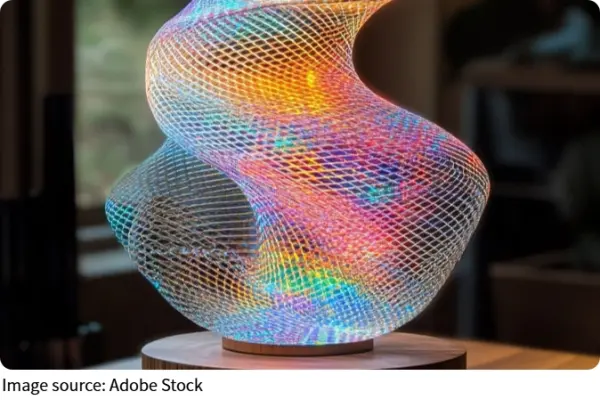
Stone absorbs light. Glass transmits it, bends it, and throws colored shadows onto the floor. That changed the viewer's experience from touching a surface to watching a room change. Czech artist Stanislav Libenský and his collaborator Jaroslava Brychtová cast massive glass blocks and prisms in the 1960s, some weighing over a ton, and stacked them into sculptures that glowed from within when light hit the edges. You did not just look at those pieces; you walked around them and saw the wall behind them shift color. No quarry stone could do that.
Steel let artists think bigger and bolder
A bronze figure the size of a person takes a foundry crew and serious money. A welded steel structure can rise twenty feet high with a small team and a rented crane. Richard Serra's massive curved walls of rusted steel, like his "Torqued Ellipses" series from the 1990s, lean and curve around you so you feel enclosed and exposed at once. You walk inside the sculpture, and the steel's weight presses on your sense of space. That scale was impossible with traditional materials because the cost and the physical limits of casting would have stopped the project cold.
Industrial materials carried a social message
Marble said "rich patron." Steel said "factory worker." When artists chose industrial materials, they were often commenting on the world around them. In the 1930s, González's welded iron figures, like "Woman Combing Her Hair," drew directly from the tools and techniques of his family's metalwork shop. Later, in the 1970s, artists like Mark di Suvero used massive steel beams salvaged from demolished buildings, bolting them into sculptures that felt raw and urban. The material itself told a story about labor, cities, and the machine age, a story that polished stone could never tell.
Cost and access changed who became a sculptor
Bronze casting requires a furnace, molds, and a crew of specialists. Welding requires a torch, some protective gear, and a willingness to learn. That lower barrier pulled in artists who did not come from wealthy backgrounds or classical training academies. David Smith, who worked as a welder in an automobile plant during the 1930s, turned his factory skills into welded steel sculptures like "Hudson River Landscape" in 1951. He proved that a guy with blue-collar hands could make gallery-worthy art, and that opened doors for a whole generation who never touched a chisel.
The next time you see a gleaming stainless steel sphere or a sheet of glass leaning against a wall, remember what it took to get there. Modern sculptors did not just swap one material for another. They traded permanence for possibility, weight for light, and tradition for the pulse of their own time. That is why the materials you see in museums today are as likely to be bolts and panes as they are to be marble and bronze. Go look at one up close, and notice how the light hits the surface, and how the piece changes as you move. That is the conversation those artists wanted you to have.