Penguin Feather Wonders

Amit Sharma
| 11-03-2026
 · Animal Team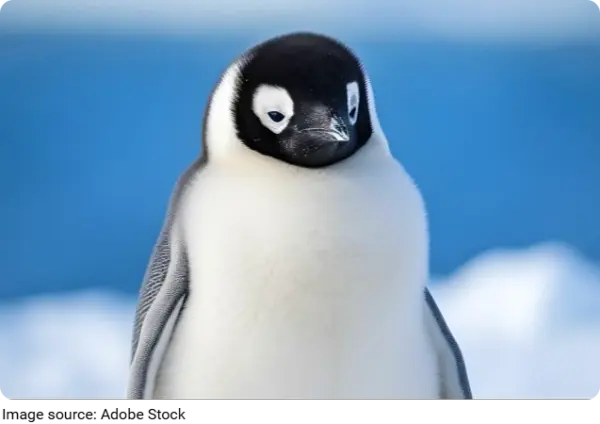
Imagine gliding beside a penguin as it slips through icy ocean water with sleek precision.
What makes this possible isn't just its body shape or strong flippers—it's the remarkable design of its feathers.
Penguin plumage is more than a simple covering of a bird; it is a highly specialized natural system that allows these flightless birds to thrive in environments ranging from freezing Antarctic seas to tropical islands.
Penguin feathers are a testament to evolution's ability to solve extreme challenges. They provide insulation, help reduce water resistance, and even play a role in buoyancy. Yet the story of how penguin feathers work—and how they differ from those of other birds—includes fascinating scientific discoveries that continue to surprise researchers.
The Structure of Penguin Feathers
Penguin feathers differ significantly from those of flying birds. In most birds, feathers grow in separate tracks with bare skin between them. In contrast, penguin plumage is uniformly dense across the entire body, forming a continuous protective layer.
This dense coverage is possible because each feather has a stout, overlapping design. These feathers lie close together like roof tiles, creating a nearly impenetrable barrier against water. Beneath the outer feathers, there are additional types of plumage: softer, down like feathers called plumules and afterfeathers, which help trap air.
The result is a plumage system that can trap air layers close to the skin. These air pockets provide two major advantages: thermal insulation in cold climates and reduced water absorption when swimming. This layered feather structure works in tandem with a special oil that penguins spread across their feathers using motions called preening. The oil enhances water repellency, making the outer plumage resilient and effective.
Thermal Insulation and Temperature Control
One of the most critical roles of penguin feathers is temperature regulation. In icy environments such as Antarctica, the water remains near freezing year round. Without insulation, a bird would quickly lose heat in such conditions.
Penguin feathers trap a thin layer of air close to the skin. This layer acts as a natural buffer, slowing heat loss and helping the bird maintain a stable internal temperature even when submerged in cold water.
Interestingly, the density of feathers on a penguin's body helps maintain consistent internal warmth across a wide range of external temperatures. For species living in milder climates, plumage coverage still provides thermal comfort and protection against wind, rain, and sun exposure.
Waterproofing and Swimming Efficiency
Penguins are exceptional swimmers. Their feathers play a central role in making this possible. The tightly interlocking structure of the outer plumage, together with water repelling oils, creates a waterproof outer surface.
This combination of feather architecture and surface oil performs much like modern waterproof fabrics: water streams off quickly rather than soaking in. As penguins dive and swim, their feathers also trap minute air bubbles that can help maintain buoyancy and streamlining underwater.
During a complete molt, penguins shed all their feathers at once and regrow a fresh coat that restores these critical functions. During this time, they cannot go into the water and must remain ashore until their new plumage fully develops.
Color and Camouflage
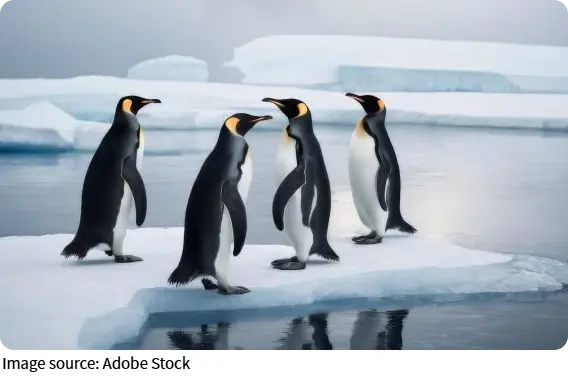
Penguin feather colors are not only distinctive but purposeful. Most species exhibit a classic counter shaded coloration—dark on the back and lighter on the belly. This pattern helps them blend into their environment from different angles.
From above, the darker back makes penguins harder to see against deep ocean waters. From below, their lighter underside matches the brighter water surface, reducing visibility to predators and prey alike. For some species, additional bright colors on the head or neck help with social recognition within colonies.
Evolutionary Insights from Ancient Feathers
Fossil discoveries have revealed clues about how penguin feathers evolved. Fossilized feathers from ancient, giant penguin species show patterns and structures similar to those of modern penguins, suggesting that specialized plumage adapted for aquatic life has deep evolutionary roots.
Interestingly, researchers studying melanin structures in fossil feathers have found color differences between ancient and modern penguins, which provides insight into how feather pigments and functions have shifted over millions of years.
Daily Feather Care
Feather maintenance is not a passive process for penguins. These birds spend significant amounts of time preening—a behavior where they spread oil over their feathers and adjust individual feathers to maintain their complex plumage.
Preening not only keeps feathers aligned for maximum waterproofing but also helps keep parasites and debris at bay.
Conclusion
Penguin feathers are more than simple coverings; they are expertly engineered systems that balance insulation, waterproofing, and hydrodynamic efficiency. From dense outer plumage to air trapping underlayers and elaborate preening rituals, these features demonstrate how evolution equips animals with precise tools for survival.
Observing a penguin emerge from frigid waters, feathers sleek and functional, reminds us of nature's capacity for elegant solutions. It is a powerful example of how even the smallest natural details—like feather structure—shape the life and resilience of remarkable creatures.